
This toy product selection guide 2026 is designed to help retailers and distributors make strategic choices about which toys to stock. Effective toy product selection 2026 requires balancing trend awareness, customer preferences, margin potential, and inventory risk. This comprehensive guide provides frameworks, criteria, and strategies for toy product selection 2026 that will help you build a profitable, appealing product assortment. Whether you are curating a new store inventory or optimizing an existing product line, mastering toy product selection 2026 is the key to retail success in a competitive marketplace.
The Strategic Importance of Toy Product Selection
Product selection is the single most impactful decision in retail toy operations. This toy product selection 2026 guide explains why.
How Product Selection Drives Retail Performance
The products you choose directly determine your sales volume, profit margins, customer satisfaction, and inventory turnover. Toy product selection 2026 is not just about picking individual items—it is about curating a cohesive assortment that meets customer needs while maximizing business performance.
Common Product Selection Mistakes to Avoid
Avoid these pitfalls identified in our toy product selection 2026 research: over-reliance on personal preference, insufficient market research, ignoring local demographics, chasing trends without validation, and failing to balance risk across the assortment.
Frameworks for Strategic Toy Product Selection 2026
This toy product selection 2026 guide provides structured frameworks for making informed product choices.
The Category-Price-Age Matrix
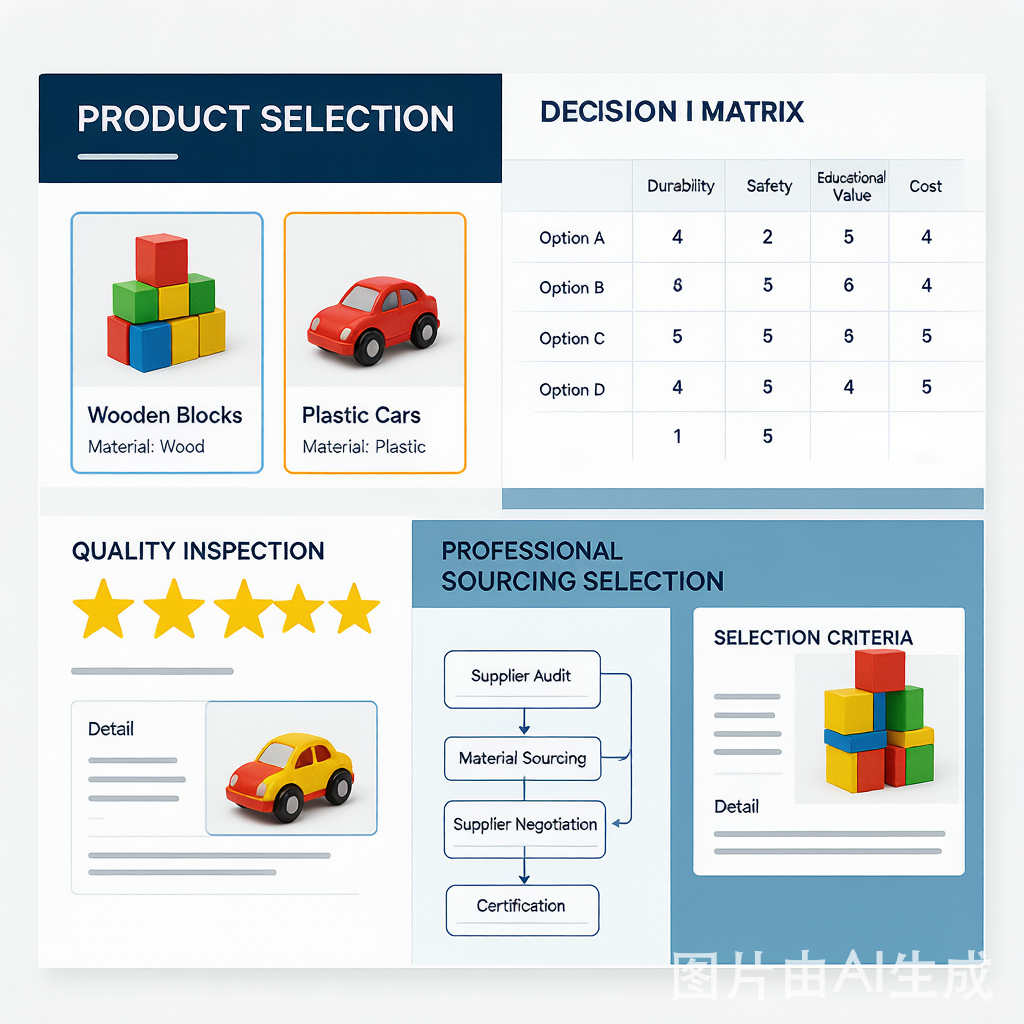
Evaluate products across three dimensions: category fit (does it complement your assortment?), price point (does it fit your pricing strategy?), and age range (does it serve your target demographic?). Toy product selection 2026 using this matrix ensures balanced, strategic inventory decisions.
The Risk-Reward Assessment Framework
Score each potential product on risk (inventory exposure, trend volatility, supplier reliability) and reward (margin potential, sales velocity, customer demand). Toy product selection 2026 should favor products with favorable risk-reward profiles while limiting exposure to high-risk items.
The 70-20-10 Assortment Rule
Allocate your inventory budget using the 70-20-10 rule: 70% in proven bestsellers, 20% in emerging trends, and 10% in experimental products. This toy product selection 2026 framework balances stability with innovation and growth potential.
Key Criteria for Evaluating Toy Products
This toy product selection 2026 guide identifies the essential evaluation criteria for every product consideration.
Market Demand Assessment
Evaluate market demand through search volume data, social media engagement, competitor analysis, and customer feedback. Toy product selection 2026 should be data-informed rather than intuition-based, using available market intelligence to validate product choices.
Margin and Profitability Analysis
Calculate true product margins including all costs: wholesale price, shipping, handling, storage, and expected shrinkage. Toy product selection 2026 must account for total landed cost and operating expenses to ensure each product contributes positively to profitability.
Quality and Safety Verification
Never compromise on quality and safety. Toy product selection 2026 requires verifying compliance with all applicable safety standards and assessing product quality through physical samples. Products that fail quality assessment should be eliminated regardless of other favorable factors.
Supplier Reliability Evaluation
Assess supplier track records for on-time delivery, quality consistency, and communication responsiveness. Toy product selection 2026 is only as reliable as the suppliers behind the products—choose products from suppliers you can trust.
Category-Specific Selection Strategies
Different toy categories require different selection approaches. This toy product selection 2026 guide provides category-specific guidance.
Selecting STEM and Educational Toys
For STEM toys, prioritize products with clear educational value, age-appropriate complexity, and strong developmental benefits. Toy product selection 2026 in this category should favor products with parent-appeal factors and demonstrated learning outcomes.
Selecting Collectibles and Trend Products
For collectibles, focus on licensed IP strength, rarity mechanics, and social media traction. Toy product selection 2026 in this category requires rapid trend identification and disciplined inventory management to capitalize on trends without overcommitting.
Selecting Evergreen Core Products
For evergreen products, prioritize quality, brand recognition, and consistent demand patterns. Toy product selection 2026 for core inventory should emphasize reliability and proven sales performance over trend potential.
Using Data to Guide Product Selection
Data-driven toy product selection 2026 outperforms intuition-based decisions. This guide covers essential data sources and analysis techniques.
Analyzing Sales Data for Selection Insights
Use historical sales data to identify patterns: which categories, price points, and product attributes correlate with strong performance. Toy product selection 2026 should leverage POS data, inventory turnover metrics, and margin analysis to guide future purchasing.
Leveraging Market Intelligence Tools
Utilize market intelligence tools including Google Trends, Amazon bestseller data, social media analytics, and trade publications. Toy product selection 2026 benefits from multiple data sources that provide a comprehensive view of market dynamics.
Seasonal and Trend-Based Selection Adjustments
Toy product selection 2026 is not static—it requires seasonal adjustments and trend responsiveness.
Planning Seasonal Product Rotations
Plan product rotations 3-4 months ahead of seasonal demand peaks. Toy product selection 2026 should include dedicated seasonal planning for Q4 holidays, summer outdoor toys, back-to-school, and spring seasonal events.
Responding to Emerging Trends
Maintain flexibility in your toy product selection 2026 strategy to capitalize on emerging trends. Reserve 10-15% of your purchasing budget for trending products that emerge during the season, using low-MOQ suppliers to test these opportunities quickly.
FAQ: Toy Product Selection 2026
How many products should a toy store carry?
Toy product selection 2026 varies by store size and format, but typical specialty toy stores carry 500-2,000 SKUs. The key is maintaining enough variety to meet customer needs without creating inventory management challenges. Quality of selection matters more than quantity.
How do I identify trending toys for product selection?
Toy product selection 2026 trend identification uses multiple sources: social media monitoring (TikTok, Instagram), Amazon bestseller tracking, trade show observations, industry publications, and supplier new release announcements. Cross-referencing multiple sources validates trend potential.
What is the ideal product mix for a toy store?
Toy product selection 2026 best practices suggest a mix of 70% proven bestsellers, 20% emerging trends, and 10% experimental products. Balance across categories, price points, and age ranges to serve your complete customer base effectively.
Conclusion: Selecting Products That Drive Success
This toy product selection guide 2026 provides the frameworks, criteria, and strategies needed to make informed product choices that drive retail success. From understanding the strategic importance of product selection and applying structured evaluation frameworks to using data intelligently and adapting to seasonal trends, each element contributes to a profitable, appealing product assortment. The key is balancing analytical rigor with market awareness, and proven products with innovative additions. Successful toy product selection 2026 is an ongoing process of evaluation, adjustment, and optimization—not a one-time decision. Explore the HATCHX wholesale catalog for carefully curated products that meet the criteria outlined in this guide, and leverage our product expertise to build an inventory that delights customers and drives business growth.