
This toy buying guide 2026 is designed specifically for retail buyers and store owners who need to make smart purchasing decisions in a rapidly evolving market. The toy buying guide 2026 covers trending products, category performance, seasonal planning, and budget allocation strategies that will help retailers stock products that sell. Whether you are a seasoned buyer or new to retail purchasing, this toy buying guide 2026 provides the market intelligence and practical frameworks you need to optimize your product assortment and maximize sales in 2026.
Market Overview: What’s Shaping Toy Buying in 2026
Before diving into specific product recommendations, this toy buying guide 2026 provides context on market forces that should influence purchasing decisions.
Key Consumer Trends Impacting Purchasing
The toy buying guide 2026 identifies several consumer trends that should shape your product selection: sustainability consciousness, STEM education focus, social media-driven demand, adult collector market growth, and the wellness toy trend. Each of these trends creates specific product opportunities that this toy buying guide 2026 explores in detail.
Economic Factors and Price Sensitivity
Economic conditions affect consumer spending patterns. The toy buying guide 2026 notes that while premium products remain viable, there is growing demand for value-oriented options. Balancing your assortment across price tiers is essential for maximizing sales across all economic conditions.
Top Toy Categories to Stock in 2026
This toy buying guide 2026 identifies the product categories with the strongest sales potential for retailers.
STEM and Educational Toys
STEM toys continue to be a top-performing category. The toy buying guide 2026 recommends stocking coding robots, science experiment kits, engineering building sets, and math games. These products appeal to education-focused parents and command strong retail prices.
Collectibles and Blind Boxes
The collectible trend shows no signs of slowing. The toy buying guide 2026 suggests allocating 15-20% of your toy budget to collectible products including blind boxes, action figures, and mystery packs that drive repeat visits and impulse purchases.
Stress Relief and Sensory Toys
Wellness toys represent a growing market segment. The toy buying guide 2026 identifies fidget toys, squishy products, and sensory items as essential stock for appealing to both children and adults seeking stress relief solutions.
Eco-Friendly and Sustainable Toys
Consumer demand for sustainable products continues to grow. The toy buying guide 2026 recommends stocking at least 10-15% of your assortment in eco-friendly toys made from recycled materials, organic fabrics, or sustainably sourced wood.
Seasonal Buying Calendar and Budget Allocation
Timing your purchases correctly is critical for maximizing sales. This toy buying guide 2026 provides a seasonal buying calendar.
Q1 (January-March) Buying Priorities
Focus on Valentine’s Day plush, spring outdoor toys, and Easter products. The toy buying guide 2026 recommends placing these orders by November-December for Q1 delivery.
Q2 (April-June) Buying Priorities
Stock up on summer outdoor toys, water play products, and back-to-school educational items. The toy buying guide 2026 suggests ordering by February-March for Q2 delivery.
Q3 (July-September) Buying Priorities
Begin holiday inventory builds. The toy buying guide 2026 emphasizes that Q3 is the critical ordering period for Q4 holiday products, with orders placed by July-August for September-October delivery.
Q4 (October-December) Buying Priorities
Execute holiday sales strategy with inventory already in stock. The toy buying guide 2026 recommends using Q4 for reorders of proven bestsellers rather than introducing new products.
Price Point Strategy for Retail Buyers
Distributing products across price tiers maximizes sales opportunities. This toy buying guide 2026 provides price point guidance.
Entry-Level Impulse Price Points
Stock products in the $1.99-9.99 retail range for impulse purchases. The toy buying guide 2026 suggests these products should represent 30-35% of your inventory, placed near checkout and in high-traffic areas.
Mid-Range Core Products
Products in the $10.99-29.99 range form the core of most toy departments. The toy buying guide 2026 recommends allocating 45-50% of your budget to this tier, focusing on proven sellers with reliable turnover.
Premium and Gift Products
Products priced $30+ serve gift occasions and premium buyers. The toy buying guide 2026 suggests 20-25% of inventory in this tier, with emphasis on licensed products, large sets, and specialty items.
Vendor Selection and Relationship Management
Choosing the right wholesale vendors is critical. This toy buying guide 2026 provides vendor evaluation guidance.
Evaluating Wholesale Suppliers
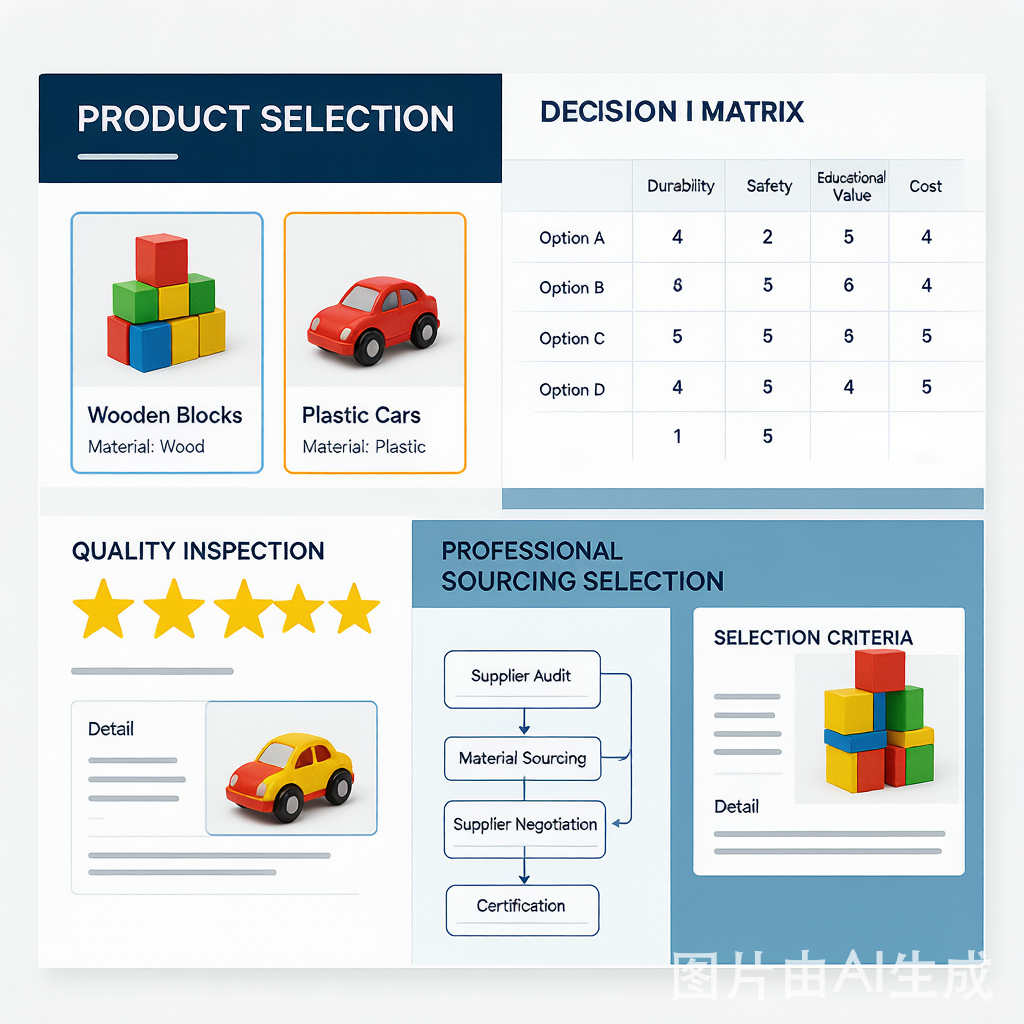
Assess suppliers based on product quality, pricing competitiveness, reliability, lead times, minimum order requirements, and customer service. The toy buying guide 2026 recommends working with 5-10 core vendors rather than spreading purchases too thin.
Negotiating Better Terms
Use your purchasing volume as leverage. The toy buying guide 2026 suggests negotiating for volume discounts, extended payment terms, exclusive products, and marketing support from your wholesale partners.
Inventory Risk Management
Managing inventory risk protects your profitability. This toy buying guide 2026 covers essential risk management practices.
Testing New Products with Small Orders
Use low-MOQ suppliers to test new products before committing to large orders. The toy buying guide 2026 recommends the 80/20 rule: 80% of purchases in proven products, 20% in new or experimental items.
Monitoring Sell-Through and Adjusting
Track sell-through rates weekly and adjust reordering accordingly. The toy buying guide 2026 emphasizes that data-driven inventory management prevents overstocking and stockouts.
FAQ: Toy Buying Guide 2026
What are the must-stock toy categories for 2026?
The toy buying guide 2026 identifies STEM toys, collectibles and blind boxes, stress relief toys, eco-friendly products, and licensed character merchandise as must-stock categories for retailers in 2026.
When should I place orders for holiday inventory?
The toy buying guide 2026 recommends placing holiday inventory orders by July-August for September-October delivery. This timeline ensures products are in stock before peak shopping season begins.
How should I allocate my toy purchasing budget?
The toy buying guide 2026 suggests allocating 45-50% to mid-range core products ($10-30 retail), 30-35% to entry-level impulse items ($2-10), and 20-25% to premium gift products ($30+).
Conclusion: Buying Smart for Retail Success
This toy buying guide 2026 provides the framework for making informed purchasing decisions that drive retail success. By understanding market trends, stocking the right categories, timing seasonal purchases, balancing price tiers, managing vendor relationships, and controlling inventory risk, you can build a product assortment that maximizes sales and profitability. The key is combining data-driven decision-making with an understanding of your specific customer base and market. Explore the HATCHX wholesale catalog to source products recommended in this toy buying guide 2026 and stock your shelves with items that will delight your customers and grow your business.